Tracing the Footprints of Professional Players Through Anonymous Digital Poker Ecosystems
Yara Lehmann · Jun 5, 2026

Tracing the Footprints of Professional Players Through Anonymous Digital Poker Ecosystems
Digital poker platforms have expanded rapidly since the early 2000s, and professional players continue to navigate systems designed to conceal identities through randomized seating, avatar selection, and account obfuscation layers. Researchers have examined how behavioral data such as bet sizing sequences, timing intervals between actions, and hand selection frequencies create identifiable patterns even when usernames and locations remain hidden from other participants.
Mechanisms of Anonymity in Modern Platforms
Operators deploy multiple technical barriers that separate player actions from personal details, including end-to-end encryption for hand histories, temporary session tokens that reset frequently, and integration with virtual private networks that mask IP addresses. Data from regulatory filings shows these measures expanded notably after 2023, when several North American and European jurisdictions updated licensing requirements to mandate stronger privacy controls for multi-table environments. Experts note that while these protections reduce direct traceability, aggregated statistics across thousands of hands still allow clustering algorithms to group accounts by consistent strategic tendencies.
Platforms licensed in regions such as New Jersey and Malta record metadata that includes device fingerprints and connection patterns without revealing names, and analysts at research institutions have used similar datasets to study migration between stakes levels. In June 2026, updates to reporting standards from the Nevada Gaming Control Board highlighted increased scrutiny of anonymous tables, requiring operators to flag accounts displaying outlier win rates over extended sample sizes.
Analytical Techniques for Identifying Patterns
Statistical models applied to public hand databases compare metrics like aggression factors, continuation bet frequencies, and river calling ranges across sessions. One study released by a Canadian academic group in early 2025 demonstrated that decision trees trained on timing data could separate professional-level play from recreational patterns with over 85 percent accuracy in controlled tests. These approaches rely on large-scale data aggregation rather than individual account linking, allowing observers to map skill migration without violating platform anonymity rules.
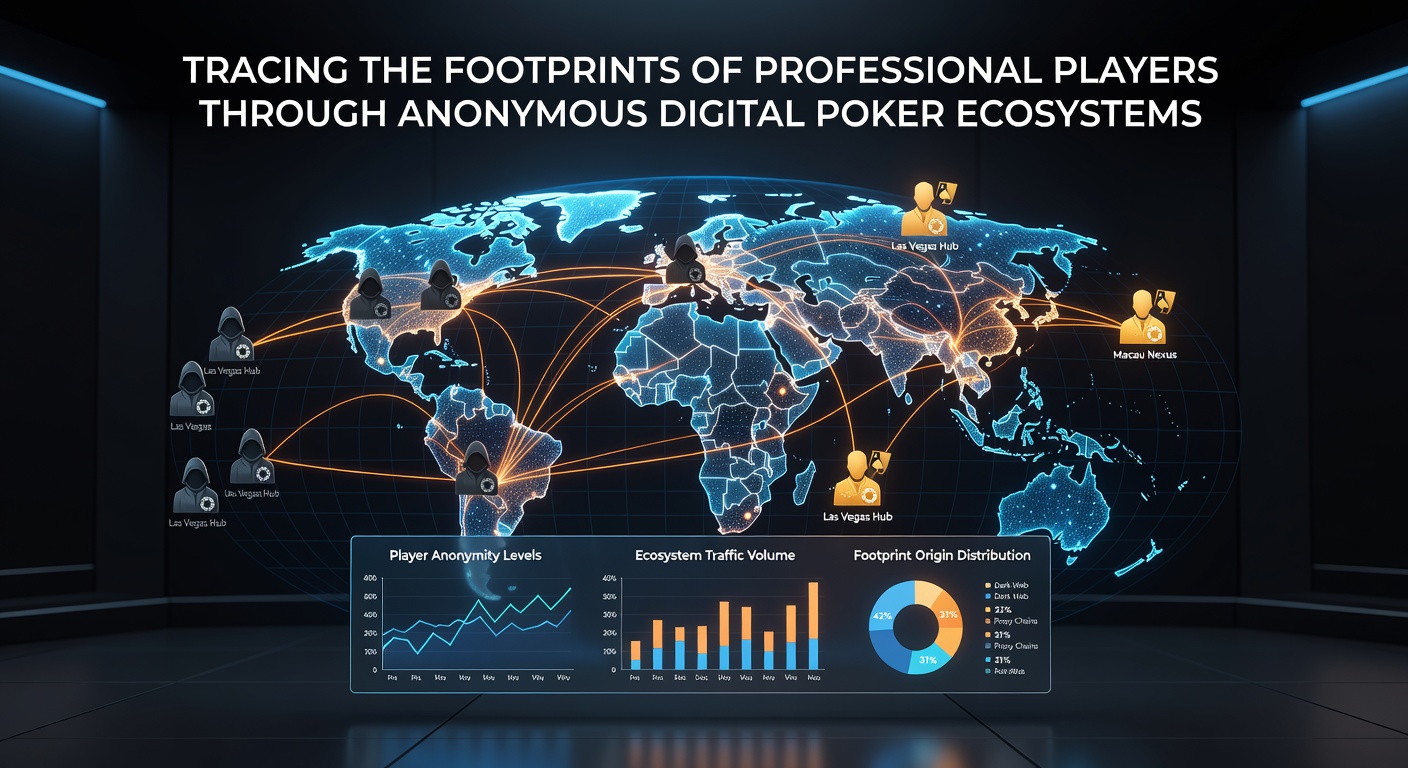
Software tools developed by third-party analytics firms process millions of hands monthly, generating heat maps that reveal preferred table dynamics and stack depth preferences. Players who maintain consistent three-bet sizing across different game types leave measurable signatures, and regulatory bodies in Australia have referenced such tools when evaluating compliance with responsible gaming thresholds. The ball remains in the operators' court when it comes to balancing player privacy against the need for fraud detection systems that flag coordinated multi-account activity.
Case Examples from Recent Ecosystems
During spring 2026, several high-volume accounts on split-pot variant tables exhibited synchronized timing adjustments that aligned with known professional schedules from live tournament circuits. Observers documented shifts in participation rates that corresponded to major series events, suggesting professionals rotate through anonymous environments to maintain volume while minimizing recognition. Figures from industry reports indicate that such rotation patterns increased by approximately 12 percent compared with 2024 baselines.
European data aggregators tracked similar movements in low-to-mid stakes no-limit hold'em pools, where win-rate clusters emerged around specific time zones despite randomized geographic indicators. Those who study these datasets point out that fold frequency distributions often remain stable enough to connect accounts across different sites, even when usernames change weekly. In June 2026, several platforms introduced optional verified player tags that preserve anonymity for casual users while allowing professionals to opt into reputation systems for high-stakes tables.
Regulatory and Technical Challenges
Jurisdictions continue to refine rules around data sharing between operators and independent auditors. The Malta Gaming Authority published guidelines in late 2025 that require periodic submission of anonymized behavioral datasets for review, focusing on detection of multi-accounting without compromising individual privacy. Similar frameworks in British Columbia emphasize real-time monitoring of deviation metrics rather than retrospective identification.
Technical hurdles persist because encryption standards evolve faster than analytical methods, and machine learning models require constant retraining as players adapt their patterns. Research indicates that professionals who deliberately vary bet sizes and timing intervals reduce cluster accuracy by up to 30 percent in short samples, though longer observation windows restore predictive power. The reality is that complete invisibility remains difficult when platforms accumulate millions of hands per day across global player pools.
Conclusion
Anonymous digital poker ecosystems generate rich behavioral datasets that researchers and regulators analyze through statistical clustering and timing analysis, revealing professional participation patterns without direct identity disclosure. Reports from bodies such as the Nevada Gaming Control Board and academic collaborations continue to document these dynamics, particularly around major events in 2026. The interplay between privacy protections and analytical capabilities shapes how footprints are traced across platforms while maintaining compliance with evolving licensing standards worldwide.