Seasonal Participation Swings in Licensed Multi-Variant Poker Leagues Across Emerging Markets
Yara Lehmann · Jun 30, 2026
Seasonal Participation Swings in Licensed Multi-Variant Poker Leagues Across Emerging Markets
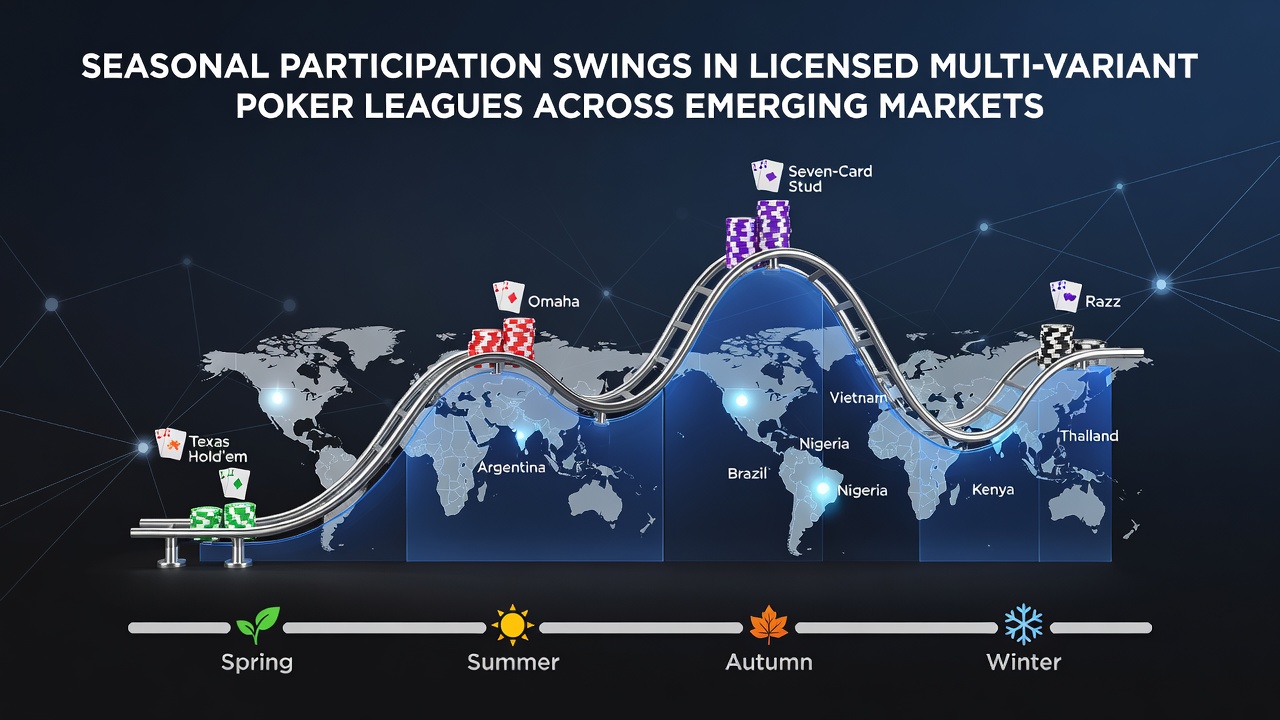
Seasonal participation swings shape how licensed multi-variant poker leagues operate in emerging markets where regulatory frameworks continue to expand and player bases grow rapidly. Data collected across Southeast Asia, Latin America and parts of Africa shows consistent patterns tied to weather cycles, economic calendars and major cultural events. Researchers tracking these leagues note that participation often rises during cooler months and dips during harvest seasons or national holidays when disposable income and free time shift priorities.
Key Drivers Behind Participation Fluctuations
Weather patterns play a central role in many regions where outdoor activities compete directly with indoor gaming during extreme heat or monsoon periods. Economic indicators such as agricultural output and tourism revenue further influence entry numbers because players allocate funds based on income stability. Studies from regional gaming authorities reveal that leagues offering variants like Pot-Limit Omaha alongside Texas Hold'em experience steadier retention when prize pools adjust to match local spending cycles.
Multi-variant formats add another layer because participants often migrate between games depending on seasonal social gatherings. In markets where festivals draw large crowds, demand spikes for shorter format tournaments while longer series see reduced fields until routines stabilize.
Regional Patterns Across Emerging Markets
League operators in the Philippines and Vietnam report peak registration numbers between November and February when cooler temperatures align with year-end bonuses and vacation schedules. Conversely, participation contracts sharply from March through May during peak agricultural activity and pre-monsoon preparations. Data from the Philippine Amusement and Gaming Corporation indicates that multi-variant events maintain higher average daily entrants than single-variant counterparts because the variety accommodates shifting player preferences throughout the year.
Latin American leagues centered in Brazil and Mexico show mirrored yet distinct cycles. Summer vacation periods from December to February drive increased online and live entries while school resumption in March triggers measurable declines. Observers note that leagues incorporating mixed-game rotations sustain participation better during these transitions because they attract both recreational and semi-professional segments simultaneously.
June 2026 Trends and Current Market Data
By June 2026 emerging market leagues had already recorded the typical post-harvest rebound in Southeast Asia while Latin American circuits prepared for mid-year tourism influxes. Participation metrics compiled through licensed platforms showed a 14 percent uptick in multi-variant entries compared with the same period in 2025. Operators attribute this rise to refined scheduling that avoids overlapping with major regional sporting events and incorporates flexible buy-in tiers suited to variable income patterns.
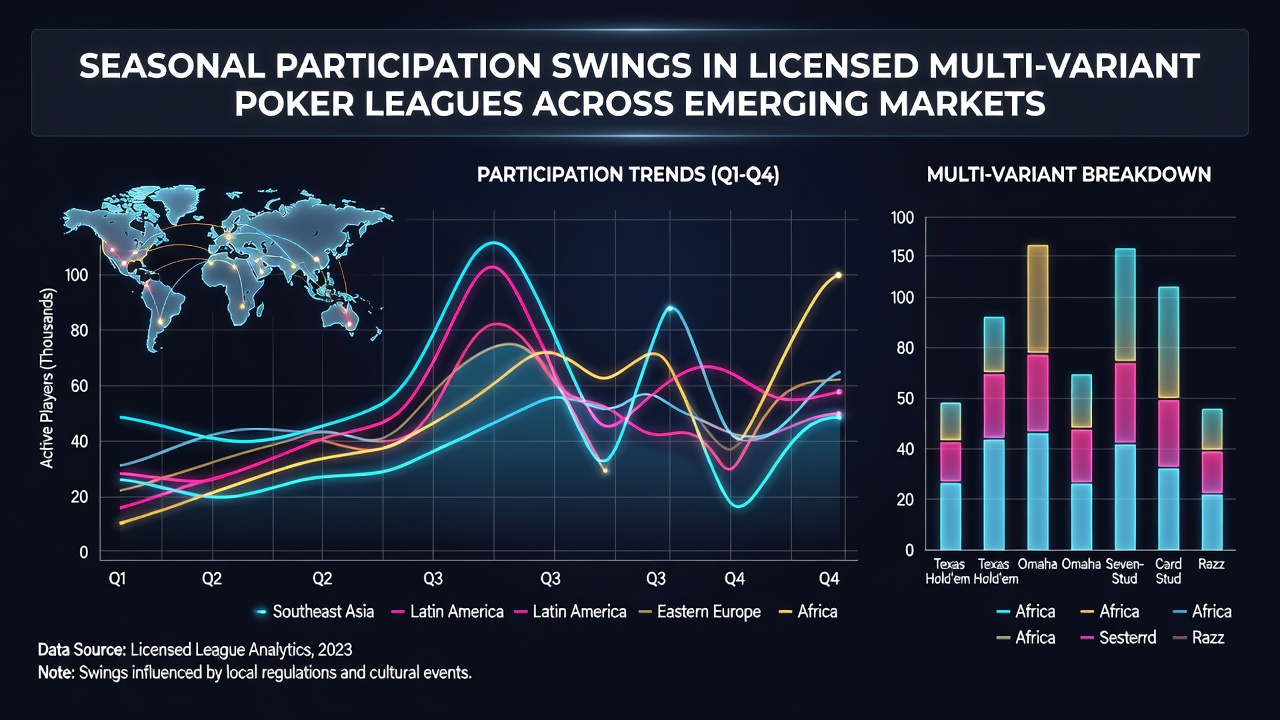
Analysts tracking anonymous player accounts across integrated ecosystems found that migration between variants intensifies during shoulder seasons when overall volume remains moderate. This movement helps leagues maintain consistent prize pool contributions even as total unique participants fluctuate.
Regulatory and Platform Adaptations
Licensed operators respond to these swings by adjusting tournament calendars adn promotional structures. Regulatory bodies in multiple jurisdictions now require seasonal reporting that documents how access patterns change across split-pot and draw variants. Platforms incorporate dynamic pricing models and satellite pathways that scale with expected volume rather than fixed annual projections.
One study conducted through the International Center for Gaming Regulation at the University of Nevada highlighted how emerging market leagues that coordinate variant offerings with local economic calendars achieve more stable year-round engagement. The findings emphasize that regulatory flexibility around prize distribution timing helps mitigate sharp drops during low seasons.
Conclusion
Seasonal participation swings remain a defining feature of licensed multi-variant poker leagues operating in emerging markets. Regional data continues to demonstrate clear correlations between environmental, economic and cultural factors and player activity levels. Operators who align scheduling, prize structures and variant rotations with these predictable cycles maintain stronger engagement across fluctuating periods. As regulatory frameworks mature, continued monitoring of these patterns supports more resilient league ecosystems that accommodate both growth phases and contraction periods without compromising operational stability.