Investigating Psychological Resilience Building Methods Among Frequent Participants in Asynchronous Online Card Events
Yara Lehmann · Jun 19, 2026
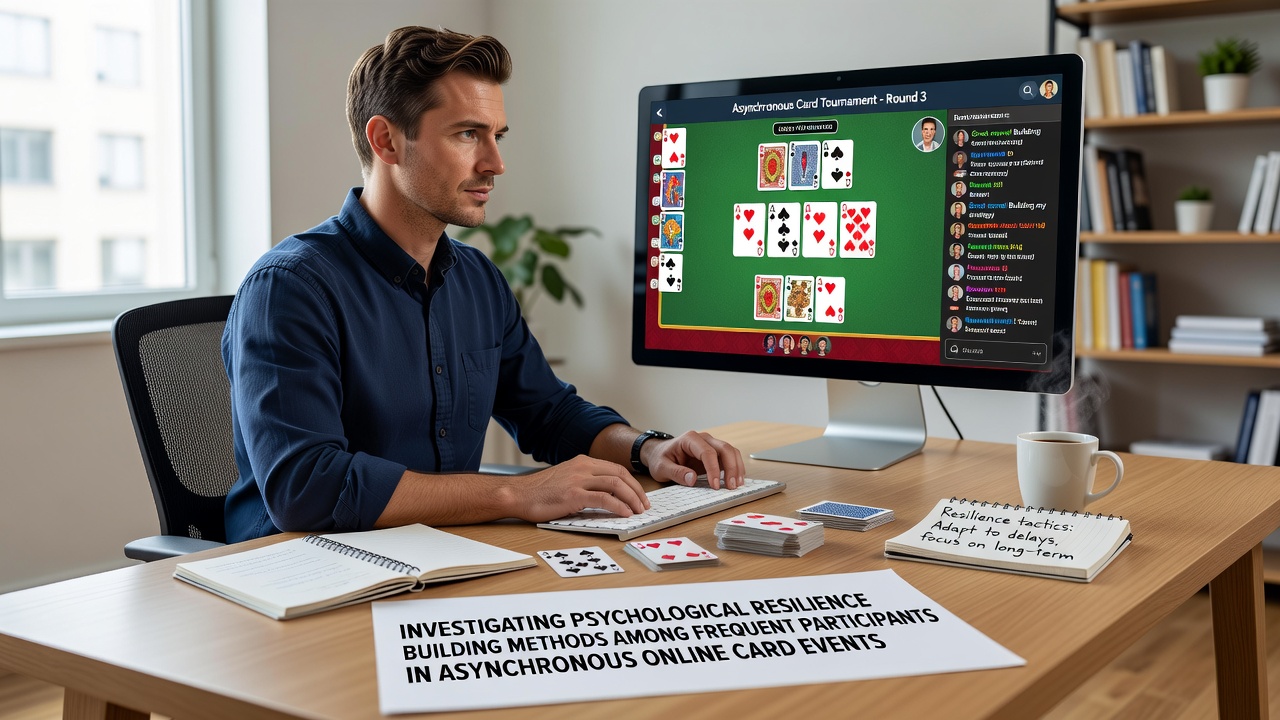
Investigating Psychological Resilience Building Methods Among Frequent Participants in Asynchronous Online Card Events
Research into psychological resilience among regular players of asynchronous online card events has expanded considerably since early 2025, with multiple academic centers tracking how individuals maintain performance across delayed decision formats. These events, which allow participants to take turns over extended periods rather than in real time, present distinct mental demands compared to synchronous formats because players must sustain focus across irregular intervals while managing external life commitments. Studies conducted by teams at the University of Nevada Reno Gaming Research Center have documented that participants who compete in multiple asynchronous tournaments weekly report elevated baseline stress markers, particularly when results remain unresolved for days. Data collected through wearable devices and self-report scales during the first half of 2026 showed that heart rate variability patterns often fluctuate more sharply during waiting periods than during active decision phases.Core Challenges Identified in Asynchronous Formats
Observers note several recurring stressors that distinguish these competitions. Prolonged uncertainty over outcomes can amplify rumination, while the absence of immediate social feedback removes natural recovery cues present in live settings. Researchers tracking cohorts across North America and Europe found that players averaging four or more events per week experienced measurable declines in sleep consistency after three consecutive weeks of participation, according to preliminary findings released in May 2026.
Evidence-Based Resilience Approaches
Multiple intervention protocols have undergone testing in digital card communities. Structured breathing exercises integrated into mobile apps show measurable effects when used between decision windows, with one Australian study reporting a 17 percent reduction in post-session anxiety scores among users who completed guided sessions. Cognitive reframing techniques, delivered through short video modules, help participants reinterpret extended waiting periods as neutral rather than threatening intervals.
Community-based support networks have also emerged as a practical method. Platforms that facilitate moderated discussion groups among frequent asynchronous players report higher retention rates for those who join weekly check-ins, based on internal analytics shared by several licensed operators in the European Union. Physical activity routines scheduled around decision deadlines appear in longitudinal data from Canadian university samples as another consistent factor associated with steadier performance metrics over six-month observation windows.

Implementation Patterns Observed in June 2026
During June 2026, several regional operator forums highlighted how players incorporate these methods into daily routines. One documented case involved a cohort in the Midwest United States who combined brief mindfulness prompts with scheduled physical movement, resulting in stable chip accumulation rates across multi-week asynchronous series. Another group operating through licensed platforms in Australia integrated peer accountability pairings, where participants exchanged anonymized progress updates without revealing specific strategic details.
Training programs offered by independent mental performance consultants have begun incorporating asynchronous-specific modules that address the unique rhythm of delayed play. These programs emphasize pre-commitment strategies for decision boundaries and post-resolution debriefing protocols designed to prevent carryover effects into subsequent events.
Measurement Tools and Ongoing Research
Standardized resilience scales adapted for digital gaming populations continue to evolve. The Connor-Davidson Resilience Scale has been modified in several recent papers to include items specific to asynchronous timing, allowing researchers to compare scores across different card formats. Early 2026 datasets from collaborative projects involving institutions in Singapore and the Netherlands indicate that higher baseline scores on these adapted measures correlate with longer participation streaks without reported burnout symptoms.
Conclusion
Current evidence points to a combination of physiological regulation techniques, cognitive strategies, and structured social connections as the primary avenues under active investigation for supporting psychological resilience in asynchronous online card events. Ongoing data collection through 2026 will clarify which combinations yield the most consistent results across demographic groups and experience levels, while regulatory bodies in multiple jurisdictions continue monitoring player welfare indicators tied to these formats.