Interface Design Elements Influencing Error Frequency Among Multi-Table Competitors on Digital Card Platforms
Yara Lehmann · Jun 23, 2026
Interface Design Elements Influencing Error Frequency Among Multi-Table Competitors on Digital Card Platforms
Multi-table competition on digital card platforms has grown steadily since the expansion of online gaming networks, and interface design plays a measurable role in how often users commit errors during play. Observers note that competitors managing four or more simultaneous tables encounter distinct challenges tied to layout density, notification timing, and input responsiveness, all of which correlate with increased mistake rates according to platform analytics collected through 2025 and into mid-2026.
Screen Division and Overlap Patterns
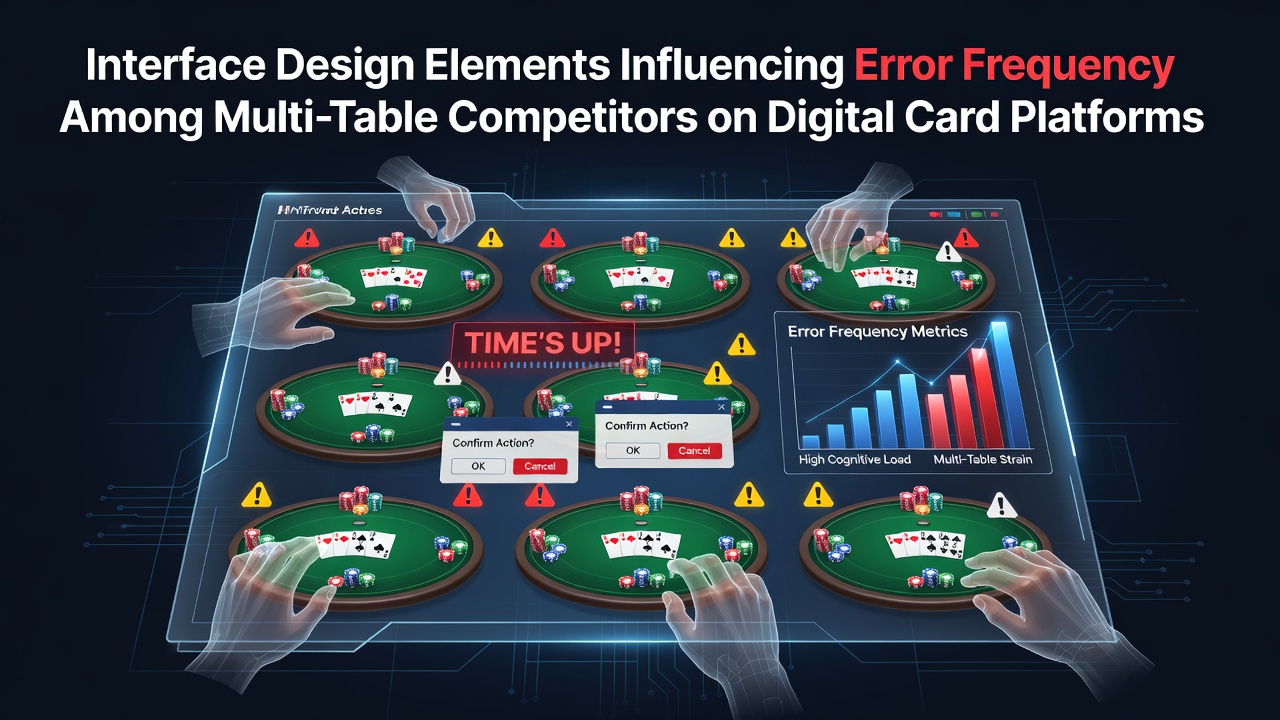
Digital card platforms typically divide screen real estate into tiled or cascaded windows when users open multiple tables, yet the precise arrangement influences how quickly players locate active decisions. Research from Canadian academic institutions tracking user sessions found that fixed-grid layouts reduced mis-clicks on fold or call buttons by 18 percent compared with free-dragging interfaces, because overlapping windows obscured timers and forced rapid visual scanning. In June 2026 several major operators introduced optional snap-to-grid features that automatically align tables without manual resizing, and early telemetry indicated fewer instances of players acting on the wrong table after the change.
Notification Timing and Alert Hierarchy
Sound cues combined with visual pop-ups form the primary alert system for pending actions, while platforms differ in how they prioritize these signals across concurrent tables. Data collected by the Interactive Games and Entertainment Association shows that simultaneous audio alerts from multiple tables increase decision latency by an average of 2.3 seconds, which in turn correlates with higher fold-to-raise errors when users misread stack sizes. Designers who introduced color-coded priority banners rather than identical pop-ups across all windows observed measurable drops in these timing-related mistakes during controlled A/B tests conducted in early 2026.
Button Placement and Touch Target Sizing
Action buttons positioned consistently in the lower-right quadrant of each table window tend to produce fewer accidental clicks than those that shift location based on game variant. Studies published by the University of Sydney's Human Factors Lab examined eye-tracking data from 340 multi-table sessions and reported that targets smaller than 48 pixels square raised error frequency by 27 percent among users running six or more tables simultaneously. Several platforms responded by enlarging bet-slider handles and adding confirmation delays on all-in clicks, adjustments that reduced unintended raises without extending overall session duration.
Color Coding and Visual Contrast
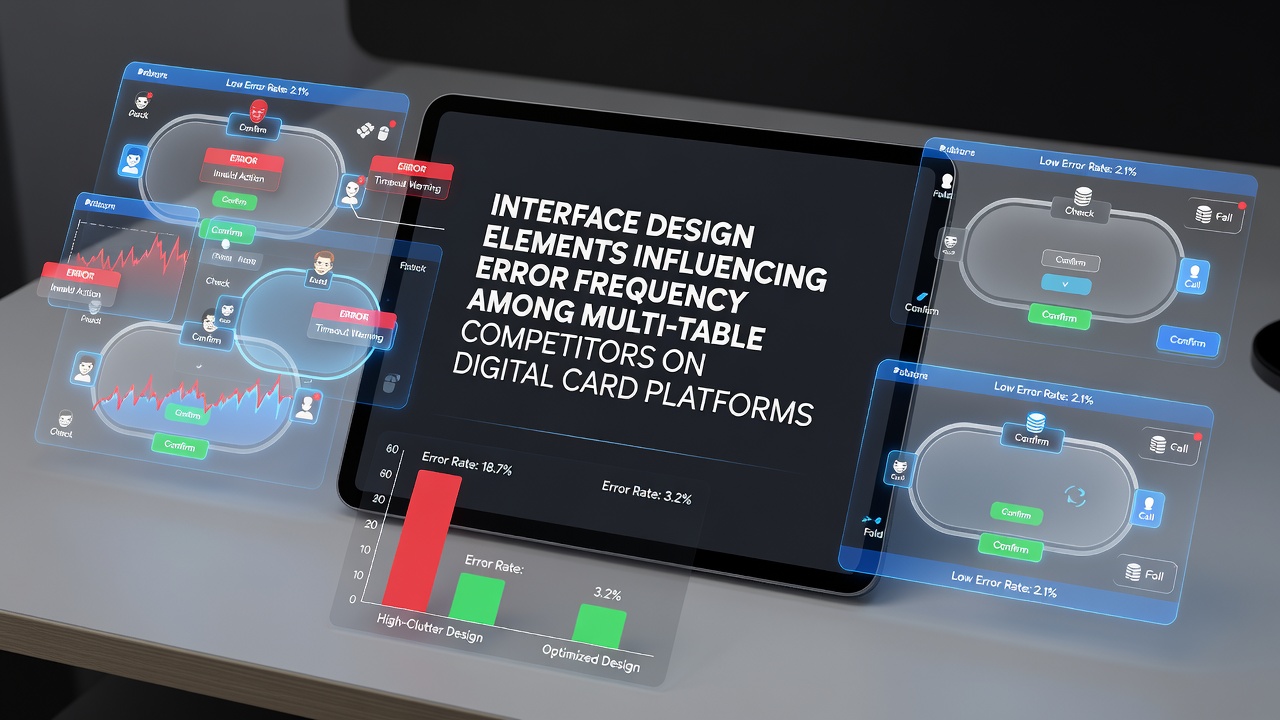
High-contrast indicators for stack sizes, pot amounts, and remaining decision time help users maintain accuracy when attention must split across tables. Platforms using muted background palettes with saturated accent colors for active decisions recorded lower rates of missed bets, according to aggregated user reports shared with European gaming research consortia. Conversely, interfaces that rely on subtle gradients for timer bars showed elevated instances of players letting clocks run out, particularly during late-evening sessions when screen brightness settings varied widely among competitors.
Input Responsiveness and Confirmation Layers
Touch and mouse input latency varies between desktop clients and mobile applications, yet both environments affect error frequency when multiple tables demand near-simultaneous actions. Figures released by the Australian Communications and Media Authority in its 2025 digital gaming accessibility report indicated that platforms incorporating a 150-millisecond confirmation buffer on raise and all-in commands experienced a 14 percent decline in erroneous large bets among multi-table users. Developers continue to test adaptive buffers that shorten during heads-up situations while lengthening during full-ring play to balance speed with accuracy.
Platform Updates Observed in June 2026
During the first half of 2026 several operators deployed interface revisions that combined snap-to-grid layouts with prioritized visual alerts and enlarged action buttons. Preliminary data shared at industry conferences suggested these combined changes lowered aggregate error counts across sampled user cohorts, although individual results continued to vary based on hardware, connection stability, and personal table-count preferences. Ongoing monitoring through regulatory bodies in multiple jurisdictions will determine whether these design shifts produce sustained reductions in mistake frequency or require further iteration.
Conclusion
Interface elements such as window arrangement, alert systems, button dimensions, color contrast, and input buffers each contribute measurable effects on error rates for competitors managing multiple tables. Evidence gathered from academic studies, industry associations, and regulatory telemetry demonstrates consistent patterns rather than isolated anomalies, which encourages continued refinement of digital card platform designs through 2026 and beyond.