How Leaderboard Mechanics Drive Engagement in Free-to-Play Poker Applications
Yara Lehmann · Jul 10, 2026
How Leaderboard Mechanics Drive Engagement in Free-to-Play Poker Applications
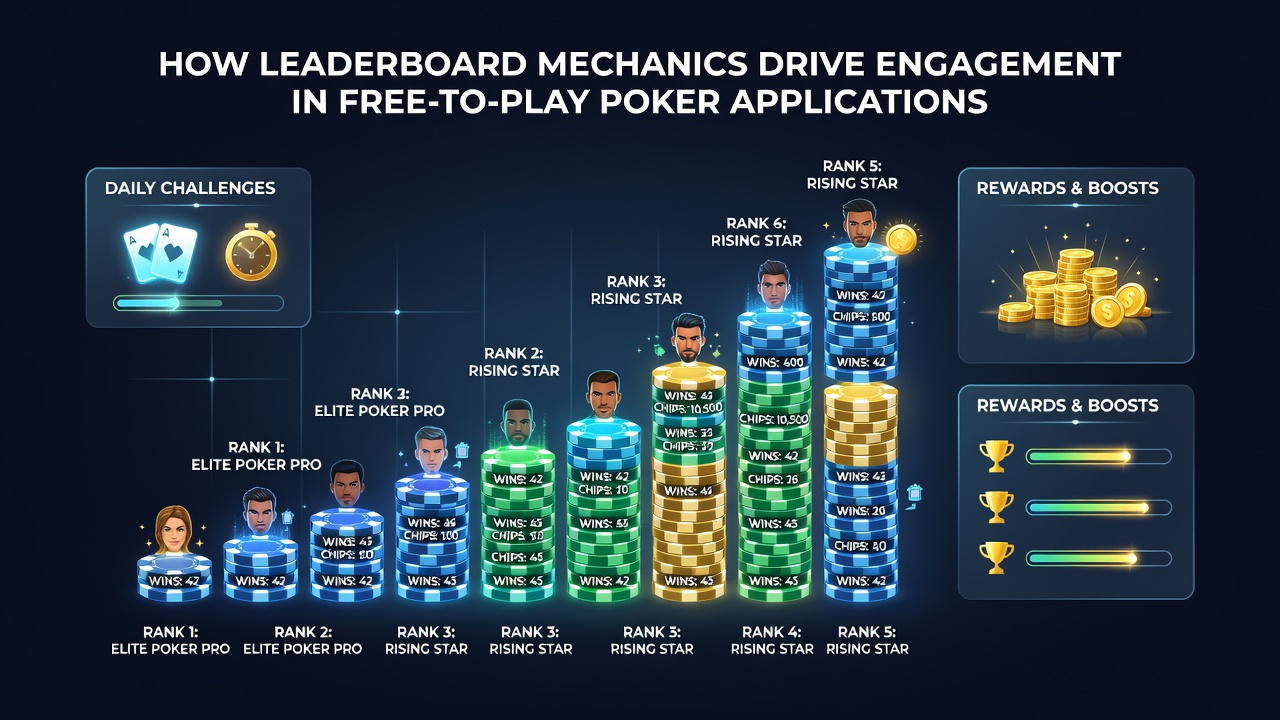
Leaderboard systems in free-to-play poker applications structure player progression through ranked positions that update in real time based on accumulated points from completed hands, tournaments, and daily challenges. These rankings reset on weekly or monthly cycles while preserving cumulative achievements that carry forward across sessions. Data from multiple platforms indicates that users who view their position relative to others increase session frequency by measurable margins compared to those who do not engage with ranking features.
Core Components of Leaderboard Design
Free-to-play poker applications typically segment leaderboards into global, regional, and friend-specific categories so participants can compare performance at different scales. Points derive from multiple sources including hand wins, tournament finishes, and bonus multipliers awarded for consecutive logins or specific game modes. Tiered brackets separate novices from experienced players, which prevents direct competition between skill levels while still allowing upward mobility through consistent play. Observers note that visible progress bars and next-tier thresholds encourage continued participation because they translate abstract effort into concrete advancement steps.
Integration with Daily and Weekly Events
Many applications tie leaderboard eligibility to scheduled events that run on fixed timers, creating recurring incentives that align with user availability patterns. A player who completes a morning sit-and-go tournament earns points that immediately reflect on both personal and group rankings, and those same points contribute toward larger weekly prizes. This structure produces repeated engagement loops because each completed action feeds directly into visible status updates rather than remaining isolated within a single session.
Observed Patterns in User Retention Data
Platform analytics collected across 2025 and into mid-2026 show that applications featuring prominent leaderboards maintain higher 30-day retention rates than comparable titles without ranking systems. Retention curves flatten more slowly when users receive push notifications about rank changes or when they can share position improvements with connected accounts. Research conducted by academic groups studying digital game mechanics has documented similar effects in other competitive formats, where relative standing serves as a persistent motivator even after initial novelty declines.
During July 2026 several major free-to-play operators introduced synchronized leaderboard events across multiple regional servers, allowing participants to compete for limited-time cosmetic rewards. Participation logs from those events revealed concentrated activity spikes in the final 48 hours before each reset, a pattern consistent with deadline-driven behavior observed in prior years.
Social and Competitive Dynamics
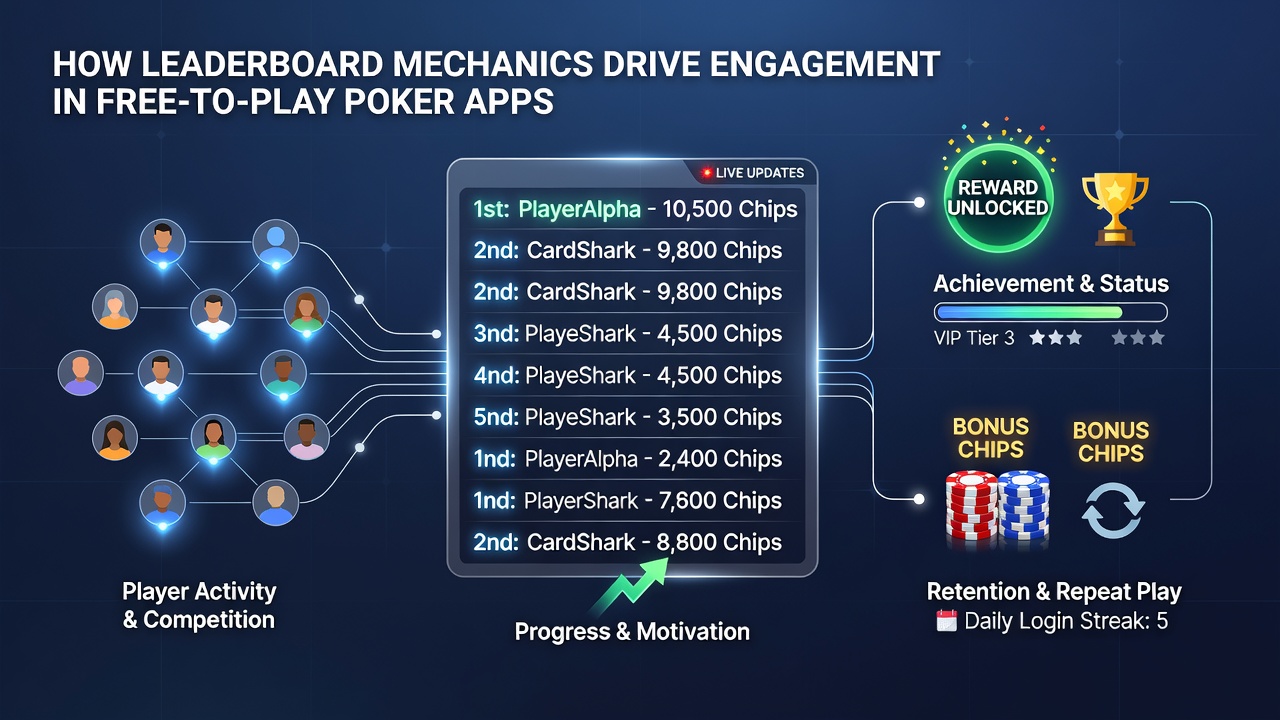
Leaderboards convert solitary play into a shared experience by displaying usernames and avatars alongside numeric scores, which fosters recognition among regular participants. Friend lists integrated into ranking views allow direct comparison, and some applications enable challenge requests that award bonus points when accepted. Industry reports from the European Gaming and Betting Association indicate that social features layered onto competitive rankings increase the average number of daily active users because players return to monitor both their own progress and the movement of known opponents.
Anonymous accounts still appear on global boards yet many users migrate toward identifiable profiles once they reach mid-tier positions, suggesting that visible achievement encourages greater platform investment. This shift occurs without any explicit requirement, arising instead from the mechanics that reward consistent identity across sessions.
Technical Implementation Considerations
Backend systems must process large volumes of hand data in near real time to maintain accurate rankings while preventing exploitation through scripted or automated play. Rate-limiting algorithms and behavioral monitoring tools operate continuously, according to documentation released by several North American operators. When discrepancies arise between reported results and server-side verification, points are adjusted retroactively, preserving the integrity of the overall standings that users rely upon for motivation.
Cross-device synchronization ensures that a player who switches from mobile to desktop continues to see teh same leaderboard state, reducing friction that might otherwise interrupt engagement sequences. Updates propagate through cloud services that store both current rankings and historical snapshots used for end-of-period prize distribution.
Conclusion
Leaderboard mechanics in free-to-play poker applications function through structured point accumulation, segmented visibility, and recurring reset cycles that together sustain user activity over extended periods. Retention statistics and participation logs demonstrate measurable correlations between ranking features and session frequency, while social integration layers amplify those effects by linking individual performance to peer comparison. As platforms continue to refine these systems through technical safeguards and event timing adjustments, the underlying data patterns remain consistent across different geographic markets and operator scales.