Decoding Timing Patterns and Their Strategic Implications in Asynchronous Digital Poker Formats
Quinn Krüger · May 22, 2026

Decoding Timing Patterns and Their Strategic Implications in Asynchronous Digital Poker Formats
Async digital poker platforms allow participants to make moves at their own pace across extended sessions rather than in real-time tables, and timing patterns emerge as players commit actions with varying speeds that often correlate with hand strength or uncertainty. Researchers have tracked these delays in formats popular on mobile apps and specialized sites where turns unfold over hours or days, revealing consistent behavioral signals that experienced observers use to refine decisions.
Core Mechanics of Timing in Async Play
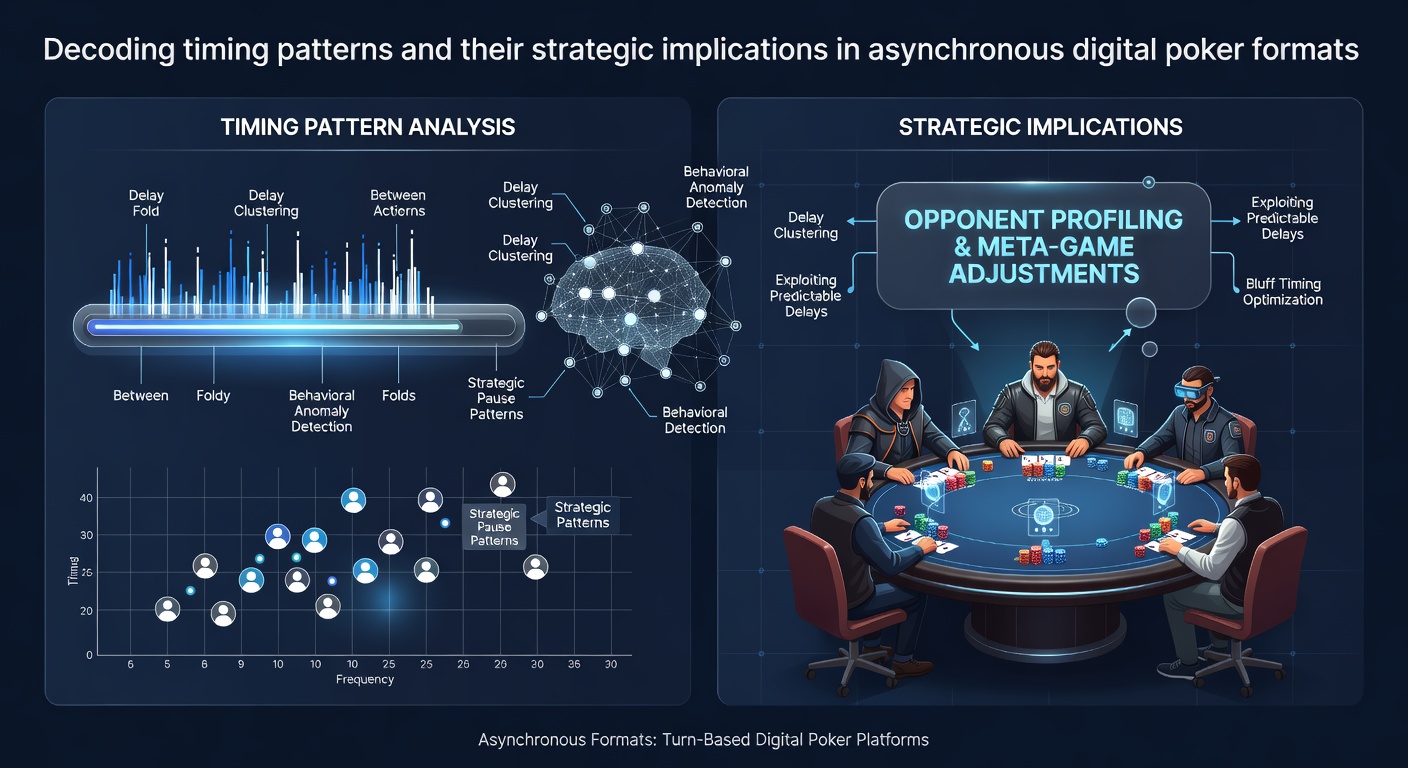
Action intervals range from near-instant clicks to deliberate pauses exceeding standard time banks, and data collected across thousands of hands shows quick decisions frequently accompany marginal holdings while longer reflections appear with premium cards or complex spots. In May 2026 several major platforms reported increased participation in these formats, driven by players balancing poker with daily schedules, which has amplified the volume of observable timing data available for pattern analysis. Studies from the International Center for Gaming Regulation indicate that average decision times cluster around 45 seconds for routine calls yet stretch beyond two minutes when players face river decisions with pot-sized bets.
Those who monitor session histories notice players who consistently act within ten seconds rarely hold strong ranges in later streets, whereas erratic timing often signals multi-tabling or divided attention rather than deliberate deception. This distinction matters because async environments lack the continuous pressure of live tables, allowing more room for unconscious tells to surface through repeated interactions with the same opponents.
Strategic Adjustments Based on Observed Patterns
Players adjust betting frequencies once they catalog an opponent's typical response windows, for instance betting larger sizes against quick callers who demonstrate weakness through rapid folds on subsequent streets. Software tools integrated into some platforms record these metrics automatically, enabling users to review histograms that highlight deviations from baseline behavior during specific tournament phases. Evidence from academic analyses at the University of Nevada's gaming laboratory demonstrates that incorporating timing filters into range construction improves equity realization by measurable margins when applied consistently over large sample sizes.
Yet the same data reveals sophisticated opponents deliberately vary their speeds to obscure patterns, mixing instant folds with calculated delays even on obvious decisions, which forces observers to cross-reference timing with bet sizing and position rather than relying on speed alone. In asynchronous formats this cat-and-mouse element intensifies because each participant controls when they return to the table, creating opportunities to reset perceived rhythms between sessions.
Real-World Applications in 2026 Tournaments
During the spring series that extended into May 2026, several mid-stakes async events featured players who leveraged timing databases to isolate recreational opponents exhibiting predictable quick-bet tendencies on draw-heavy boards. One documented case involved a regular who shifted from standard continuation bets to delayed overbets after noting an adversary's average response time dropped sharply following flop raises. Platform analytics shared in industry reports confirm such adjustments occur more frequently as field sizes grow and historical data accumulates across repeated entries.
Regulatory frameworks in regions like Nevada and Australia continue to monitor these tools for fairness, requiring operators to maintain transparent logging while permitting statistical overlays that do not alter random outcomes. Observers note that timing exploitation remains legal in most jurisdictions because it derives from publicly visible action logs rather than external software interference.
Limitations and Countermeasures
Randomized time banks introduced by certain operators disrupt pure pattern recognition by inserting variable minimum delays, and participants who spread their sessions across multiple devices further complicate consistent tracking. Research indicates these countermeasures reduce the predictive power of timing data by approximately thirty percent in controlled tests, though dedicated analysts compensate by focusing on broader session trends instead of isolated decisions.
Multi-account detection systems also flag suspicious timing clusters that suggest coordinated play, adding another layer of scrutiny that indirectly affects how openly players can experiment with deliberate speed variations. Those who study the format long-term recognize that timing serves as one data point among many, best combined with positional awareness and historical aggression factors to build reliable reads.
Conclusion
Timing patterns in asynchronous digital poker provide quantifiable edges when systematically decoded, yet they require ongoing adaptation as both opponents and platforms evolve their approaches. Data from multiple regulatory and academic sources shows measurable impacts on win rates for those who integrate these observations into broader strategy without over-reliance on any single metric. As participation expands through 2026, the interplay between recorded action speeds and decision frameworks continues to shape competitive outcomes across this distinctive poker variant.