Charting migration pathways from demo tables to paid multi-variant circuits
Yara Lehmann · May 31, 2026
Charting migration pathways from demo tables to paid multi-variant circuits
Demo tables serve as entry points for many individuals exploring poker variants without financial commitment, and data from platform analytics show steady transitions into paid multi-variant circuits where Hold'em, Omaha, and mixed-game formats run alongside one another. Observers note that conversion rates often climb when players accumulate sufficient virtual experience before depositing real funds, with industry reports tracking these movements through account activity logs and tournament registrations.
Initial exposure through demo environments
Free-play platforms allow users to test hand rankings, position dynamics, and basic betting structures across multiple games without risk, and studies from gaming research firms indicate that participants who spend at least 50 hours on demo tables demonstrate higher retention once they enter real-money environments. These early sessions frequently occur on mobile applications or browser-based sites that mirror the interface of paid counterparts, creating familiarity that reduces the learning curve during the switch.
Regional licensing bodies such as iGaming Ontario track player journeys from practice modes to cash tables, and figures released in early 2026 reveal that approximately 28 percent of registered accounts in Ontario migrated within six months of first demo activity. Similar patterns appear in European markets monitored by the European Gaming and Betting Association, where cross-variant exposure in demo settings correlates with eventual participation in paid series featuring rotating game types.
Data patterns in player progression
Analytics firms compile datasets that follow account creation dates, game-type selections, and deposit timestamps, and these records show clusters of activity around major circuit events. In May 2026, several online operators reported increased demo-to-paid shifts coinciding with satellite qualifiers for upcoming festival schedules, as players sought to build bankrolls through low-stakes real-money events after practicing mixed-game formats for free.
One study conducted by university researchers examined over 120,000 user profiles across North American and Australian platforms, finding that individuals who sampled at least three distinct variants in demo mode converted at rates 1.4 times higher than those who remained in single-game practice. The same dataset highlighted that transitions accelerate when demo interfaces include tutorial overlays explaining pot odds and implied odds, elements that carry directly into paid multi-variant structures.
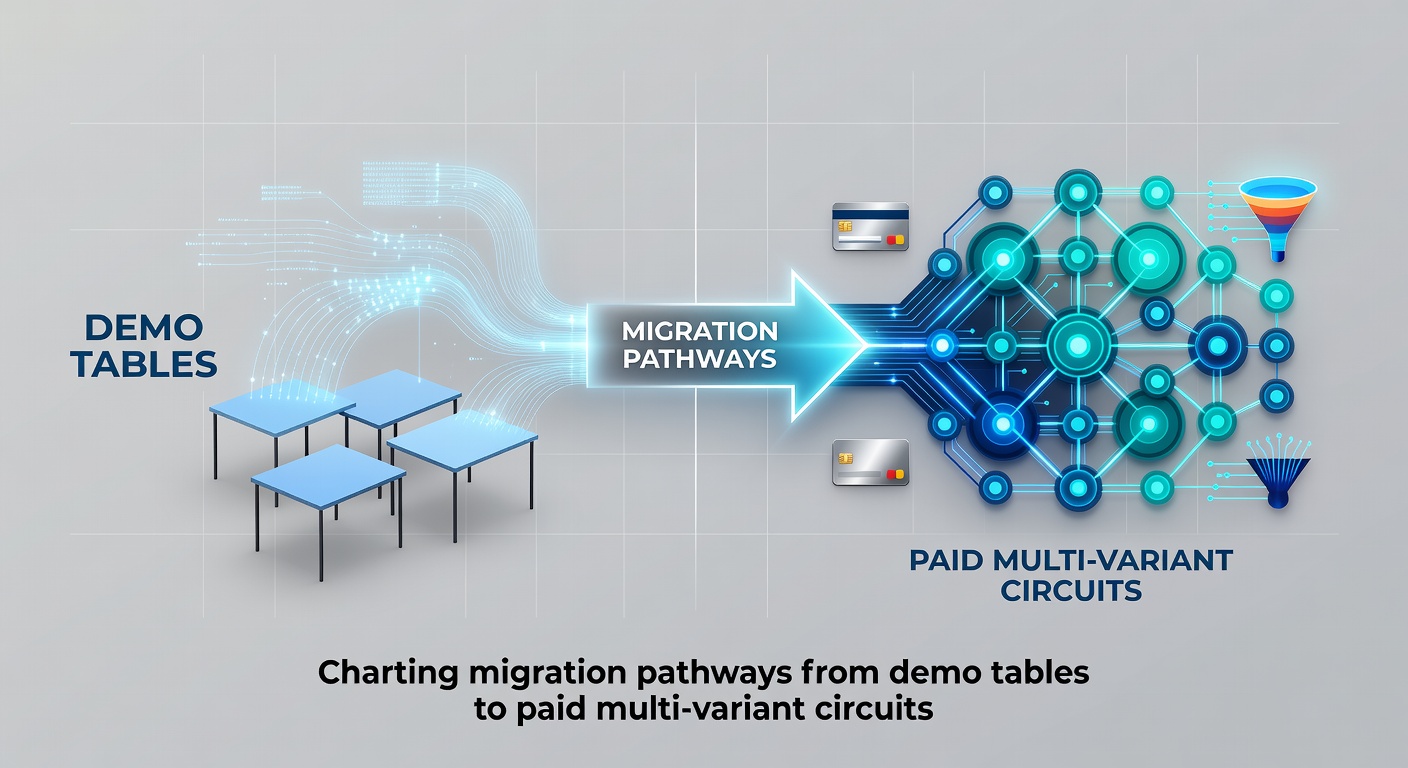
Role of multi-variant circuits in retention
Paid circuits that schedule Hold'em, Omaha Hi-Lo, and Stud rotations within the same festival create natural progression points for players who first encountered these games in demo settings. Tournament series organizers publish daily schedules that list variant changes, and registration data indicate that participants who previously practiced multiple formats online maintain longer session durations once they pay entry fees. Circuit operators have observed that mixed-game events attract a subset of players whose demo histories include frequent switches between game types rather than prolonged focus on one variant.
Platform operators integrate tracking tools that flag when demo users begin viewing paid tournament lobbies, and these signals trigger targeted promotions such as deposit matches or satellite entries. Regulatory frameworks in several jurisdictions require clear separation between free and real-money environments, yet permit operators to display migration pathways through in-app notifications that link practice statistics to upcoming paid events.
Regulatory and platform influences
Licensing authorities in Canada and parts of Europe mandate responsible gaming features that include session reminders and deposit limits, features that often activate automatically once an account moves from demo to paid status. These safeguards appear in policy documents from bodies overseeing online gaming, and compliance reports show that operators adjust migration prompts to align with local rules on player protection. Australian regulatory updates scheduled for review in mid-2026 are expected to address how demo data may inform responsible gaming interventions for players entering paid multi-variant formats.
Technical integrations between demo and paid systems allow seamless transfer of certain interface preferences, such as card animations and table layouts, while financial transactions remain isolated behind verified payment gateways. Industry groups document that such continuity supports smoother transitions, particularly for players exploring circuits that combine multiple poker variants in a single week-long schedule.
Conclusion
Records compiled by operators and regulators illustrate consistent pathways from demo tables into paid multi-variant circuits, supported by interface familiarity, cross-game practice, and timed promotional triggers around major events. Data gathered through 2026 continue to refine understanding of how initial free-play exposure translates into sustained participation across Hold'em, Omaha, and mixed formats, while licensing requirements shape the presentation of these transitions in different jurisdictions.